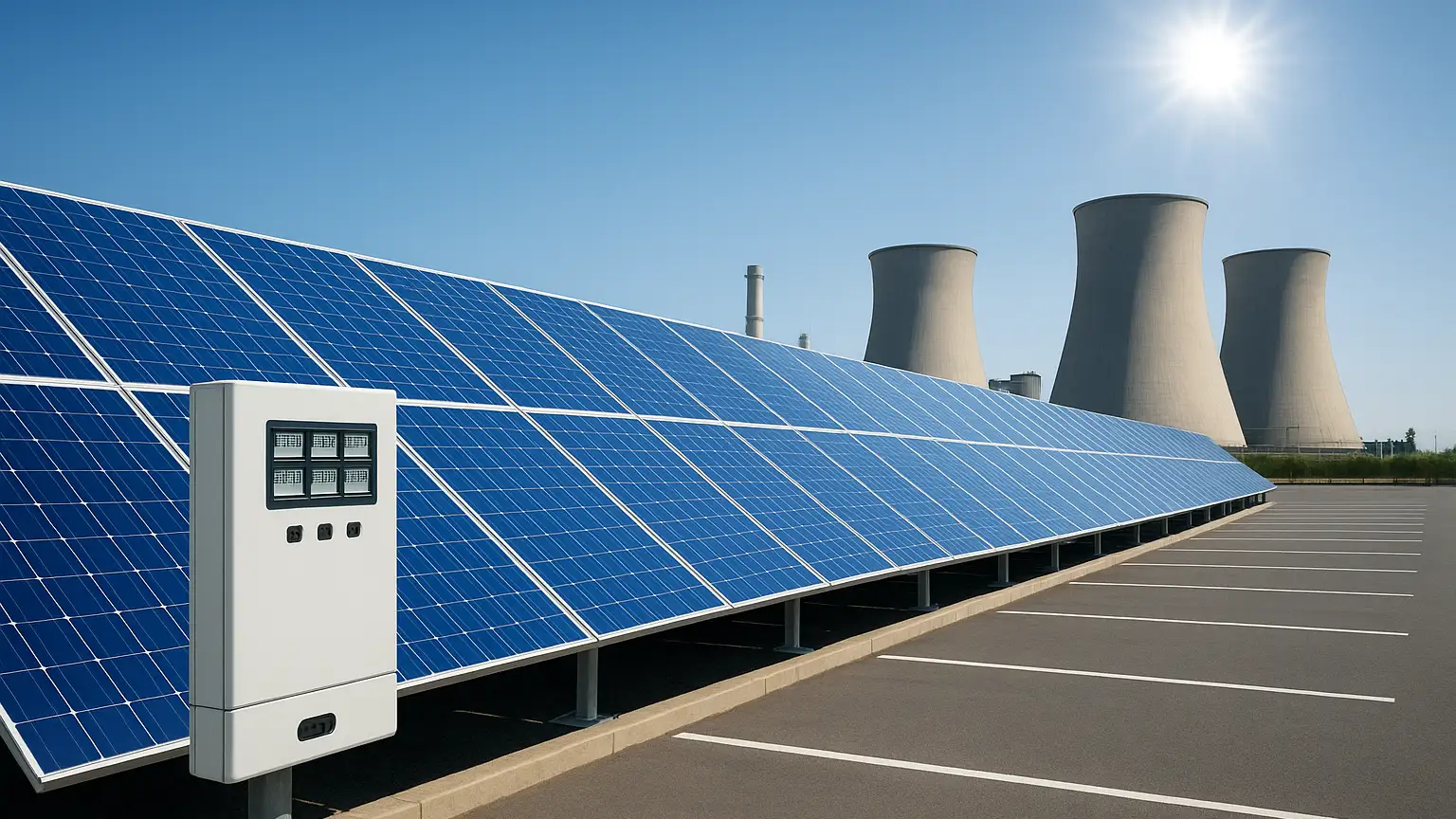
Arizona does not have a sunlight problem. It has a physics problem, a wiring problem, and a heat problem. That is a strange thing to say in a state that gets more usable sun than almost anywhere on Earth. But the easy part of solar is already solved here. Panels are cheap, land is flat and wide open, and the sun shows up on schedule almost every single day.
So why do Arizona utilities still fire up gas plants on August evenings? Why do solar projects sit in line for years before they connect? And why does a panel rated for 400 watts often deliver closer to 320 on a July afternoon in Buckeye?
The answers have almost nothing to do with generation and everything to do with what happens after photons hit silicon. Below are the three bottlenecks that no amount of extra sunshine can fix, and the work happening across the Valley to chip away at each one.
The Duck Curve Has A Sharper Beak In The Desert
Grid operators talk about the "duck curve," which is just a chart shape. Solar floods the grid at midday, demand dips, then solar drops off right as everyone comes home and cranks the air conditioning. The curve looks like a duck's back and neck.
In Arizona, that neck is brutally steep. Peak demand does not arrive at noon. It arrives between 5 p.m. and 8 p.m. in July, when the sun is sliding toward the horizon and 115 degree heat is still baked into every wall and rooftop in the metro. Solar output is falling off a cliff at the exact hour the state needs the most power it will need all year.
Adding more panels does not move that curve. It makes the midday oversupply worse while doing very little for the evening crunch. What moves the curve is storage, and storage is where the real engineering fight is.
What Storage Actually Has To Survive Here
- Heat is the enemy of chemistry. Lithium iron phosphate cells degrade faster at high ambient temperatures, and Arizona battery yards sit in sustained triple digits for months.
- Cooling costs energy. A battery container that needs heavy HVAC to stay in range is spending part of its stored power just to stay alive.
- Duration matters more than capacity. A four hour battery covers the evening ramp. An eight hour battery changes the whole planning conversation.
- Cycling is constant. Desert storage assets charge and discharge nearly every day, not occasionally. Wear adds up fast.
“The interesting question is not how many megawatt hours you install, it is how many you still have in year twelve,” says Marcus Deyoung, a systems engineer who works on utility scale energy projects and has spent years watching desert installations age. “Thermal management on the storage side is the whole ballgame in a climate like this.”
That is why a growing cluster of Arizona firms are focused less on cells and more on enclosures, airflow, phase change materials, and liquid cooling loops. It is unglamorous work, closer in spirit to the hackathon backroom energy hacks than to a groundbreaking ceremony. It is also the difference between a battery bank that lasts fifteen years and one that limps to eight.
Bottleneck Two: You Cannot Ship Sunshine Without Copper
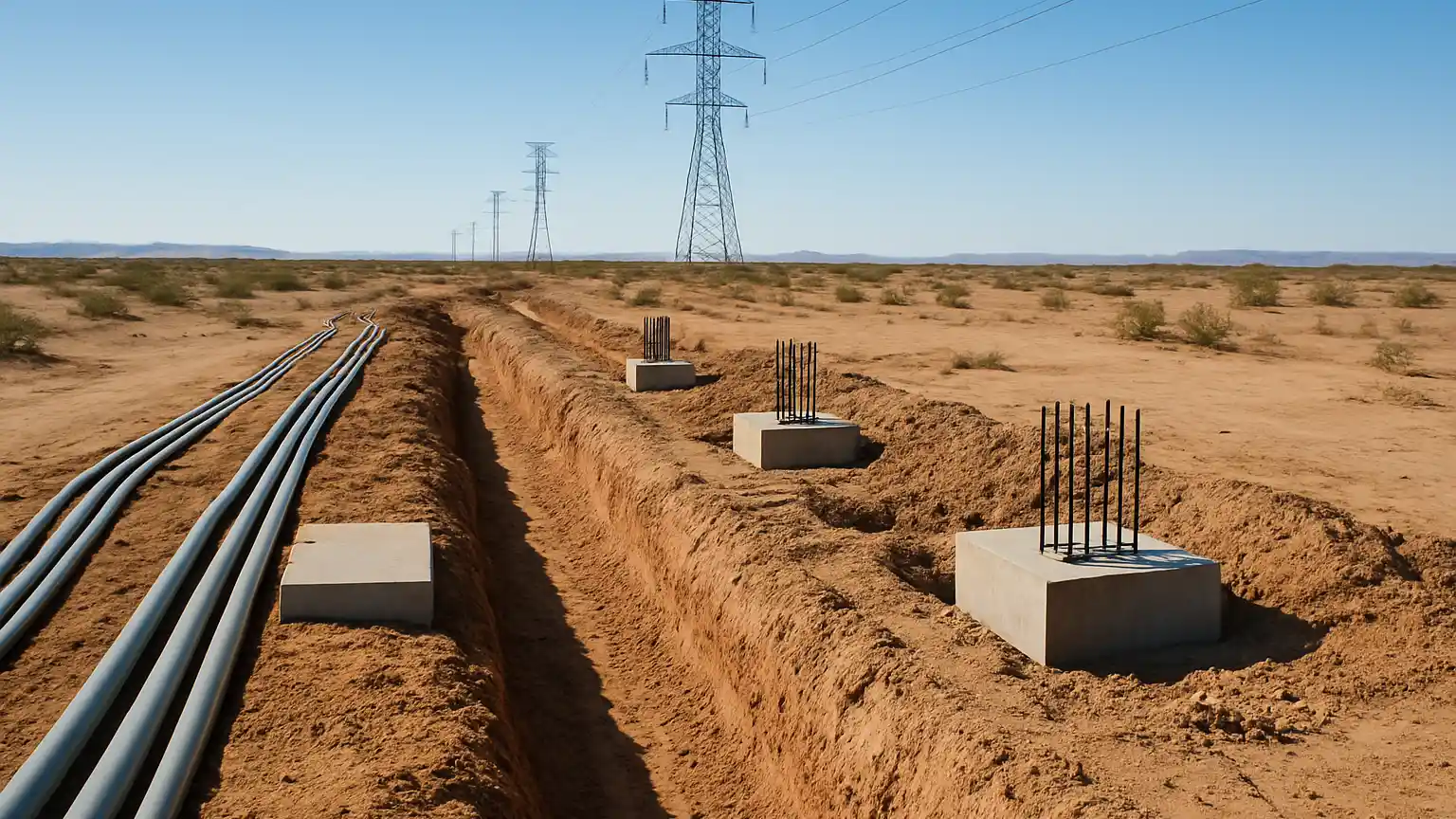
Here is the part that frustrates developers most. A solar farm can be fully financed, permitted, and shovel ready and still wait years. Not for panels. For permission to plug in.
Interconnection queues across the West are stuffed with projects waiting on studies, upgrades, and new lines. Arizona's transmission system was largely designed around a handful of big central power plants sending electricity outward. Distributed solar flips that logic. Now power wants to flow from rural Pinal and La Paz counties toward Phoenix and Tucson, and sometimes outward to California, on wires that were never sized for it.
Building new high voltage transmission takes roughly a decade when you count routing, environmental review, tribal and federal land coordination, and construction. Building a solar farm takes about eighteen months. That mismatch is the single biggest reason Arizona's solar buildout is slower than its sunshine would suggest.
Software Is The Cheapest New Wire
Since you cannot conjure new lines quickly, the smarter play is squeezing more out of the ones already standing. That is a data problem, and it is where Arizona's software talent is showing up in a way that surprises people who think of solar as a hardware story.
- Dynamic line rating. Transmission capacity is not fixed. A line can safely carry more current when it is windy and cool. Sensors plus weather models let operators unlock real headroom instead of assuming worst case all year.
- Advanced power flow control. Devices that nudge electricity onto underused parallel paths, relieving the one line that is bottlenecking an entire corridor.
- Forecasting at the feeder level. Predicting rooftop solar output and neighborhood load hour by hour so utilities can pre position storage instead of reacting.
- Virtual power plants. Thousands of home batteries and smart thermostats coordinated as one dispatchable resource during the evening ramp.
The virtual power plant piece deserves attention because Arizona has an unusual advantage. Metro Phoenix has enormous numbers of relatively new homes with modern panels, smart HVAC, and increasingly, EVs in the garage. That fleet is a distributed battery hiding in plain sight, and the same tech innovations behind electric rides that make cars smarter also make them grid assets when bidirectional charging goes mainstream.
None of this requires a single new tower. It requires sensors, models, and utilities willing to trust them. That is a cultural shift as much as a technical one, and the residential side has its own version of it, where an unexamined solar lease turns into the rental where panels wreck a closing.
Bottleneck Three: Panels Hate The Heat As Much As You Do
This is the one that catches newcomers off guard. Solar panels are not powered by heat. They are powered by light, and heat actively hurts them.
Every silicon panel has a temperature coefficient, usually around negative 0.35 percent per degree Celsius above 25 degrees. That sounds small. Now consider that a dark panel sitting in still desert air can reach 65 to 75 degrees Celsius on its back surface during a summer afternoon. Do the math and you are looking at roughly 12 to 18 percent lost output, right in the middle of the day, during the season when the grid is most desperate. Cloudy Germany sometimes gets better per panel efficiency than Yuma. That is not a joke, it is a spec sheet.
Three Ways Local Engineers Are Fighting Derating
- Airflow first. Raising racking height and widening row gaps to let convection strip heat off the back of modules. Simple, cheap, and often skipped to save land.
- Bifacial plus reflective ground. Panels that collect light from both sides, paired with light colored gravel, gain output without adding heat load to the top surface.
- Active and passive cooling. Water cooled backsheets, radiative cooling coatings, and phase change layers that buffer the worst hour of the day.
Agrivoltaics: The Fix That Grows Food
The most interesting Arizona answer is not a gadget. It is putting crops underneath the panels.
Research plots around Tucson and the Phoenix area have shown something counterintuitive. Plant leafy greens, herbs, or peppers in the shade of elevated panels and the crops transpire moisture into the air. That evaporative cooling drops the temperature under the array by several degrees. Cooler air means cooler panels, and cooler panels mean higher output. Meanwhile the crops get relief from direct summer sun and need noticeably less irrigation water.
Both sides win, which almost never happens in engineering. The panel gains a couple of percentage points of efficiency. The farm cuts water use in a state where water is the real currency. And the land does two jobs instead of one, which matters enormously when every acre near a substation is precious.
The tricky parts are practical. Elevated racking costs more steel. Tractors and harvest crews need clearance and access lanes. Panel washing schedules have to work around planting cycles. These are solvable logistics problems, and exactly the kind of thing that gets sorted out by the operations and scheduling tools Arizona's software sector already builds well, from dispatch platforms to the field service management software that keeps crews coordinated across sprawling sites.
The Desert's Real Advantage Was Never The Sun
Arizona has spent two decades being told it won the solar lottery. That framing was always a little lazy. Sunshine is the input everyone can buy, and it stopped being the scarce ingredient years ago. What is scarce is the ability to hold energy until evening, the wires to carry it where people live, and the engineering to keep silicon cool enough to do its job when the thermometer reads 115.
The encouraging part is that all three bottlenecks are being worked on right here, by people who understand the desert because they live in it. Thermal engineers designing battery enclosures that survive a decade of triple digit summers. Software teams teaching old transmission lines new tricks. Researchers proving that a pepper plant can make a solar panel more efficient. None of it makes for a dramatic ribbon cutting. All of it compounds. Arizona's next chapter in energy will not be won by adding more panels to more roofs. It will be won by the far less obvious work of storage, wires, and shade.