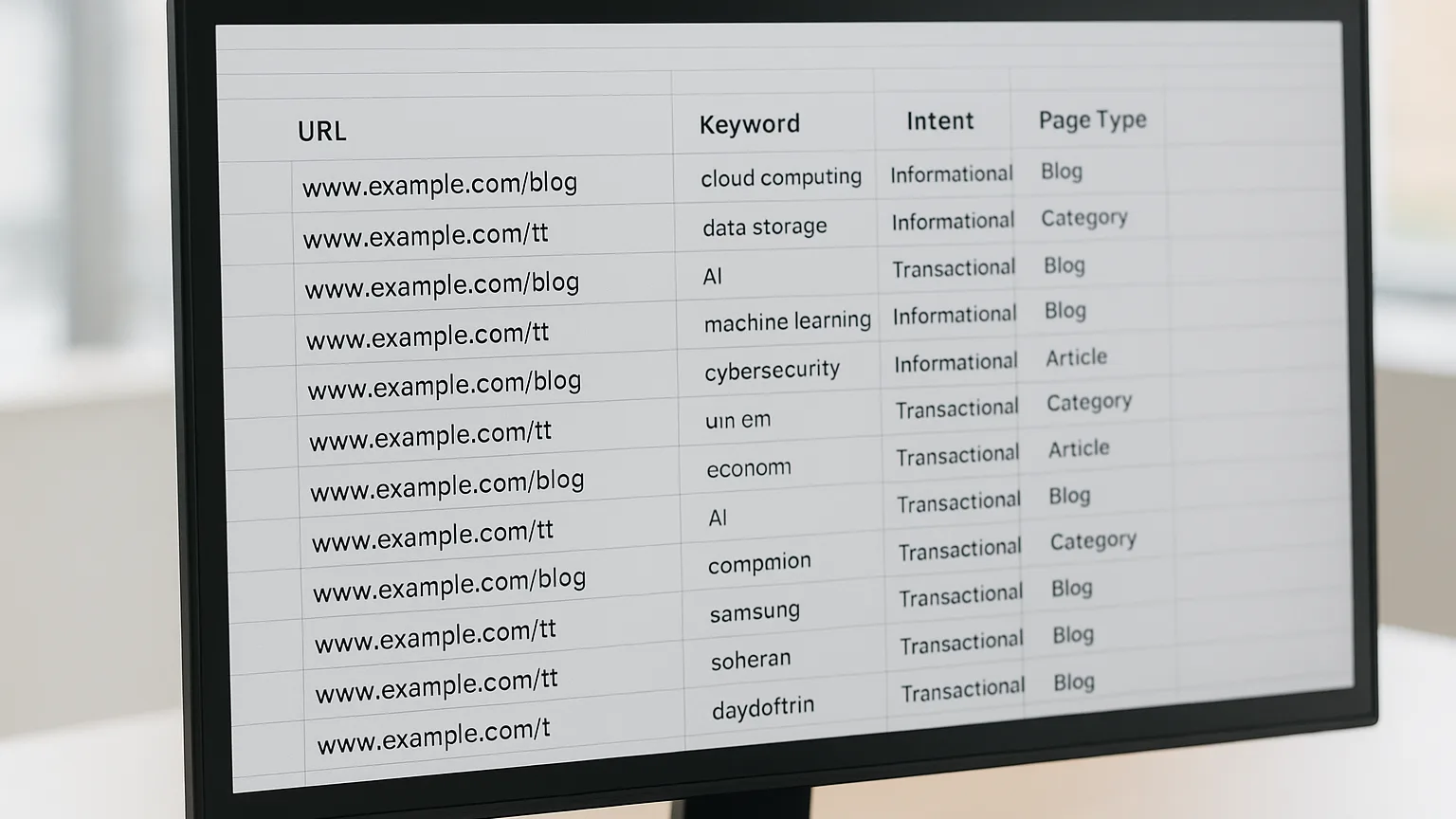
A page can only win one fight at a time. This is the simple map that decides which URL owns which search before a single word gets written.
In the last part we went hunting for the damage with Search Console query splits, site: searches, and a rough audit, spotting which pages were trading places in the results. Finding the overlap is useful. Not creating more of it is worth far more, because every unplanned post adds another competitor to your own roster.
This series was shaped in part by the technical guidance of Soderman SEO, whose work on identifying and eliminating cannibalization makes a point most content teams skip: the problem is almost never one bad page, it is a missing rule about who owns what.
The Ownership Test Every New Page Must Pass
Before anything gets written or scheduled, it should clear one question. Can you name the single primary keyword this URL will own, and the single reason a searcher types it? If two people give two different answers, the page is not ready. If the answer matches a page you already have, you do not need a new page. Improve the old one.
Intent is the part teams get wrong most often. "Managed IT services" and "how much do managed IT services cost" look close enough to bundle together, but one searcher wants a provider and the other wants a number. A service page and a blog post can both rank happily when each is built for a different job. Two blog posts chasing the same job split clicks, links, and authority between them, which is exactly the pattern that surfaced when pages are fighting each other gave you a clear picture of your query splits. So the rule is short enough to remember: one URL, one primary keyword, one intent.

What Actually Belongs in the Map
A keyword ownership map is not a giant research export. It is a working document anyone on the team can open and read in under a minute. Keep it small enough to maintain and it stays alive; make it a 4,000 row spreadsheet and it dies within a quarter.
- URL: the live address, not the working title
- Primary keyword: one per row, no exceptions
- Intent: informational, commercial, transactional, or navigational
- Page type: service page, location page, blog post, comparison, case study
- Supporting terms: the close variants this page is allowed to use
- Owner: the person accountable for updates
- Status: live, needs refresh, merge candidate, or retired
- Last reviewed: a date, so stale rows are obvious
Keep the Money Pages Protected
Service pages and landing pages get first claim on commercial terms. Blog content orbits around them and answers questions, a division of labor that matters even more as answer engines pull short responses from your pages, something worth thinking through alongside zero-click content and how summaries choose a source. When a blog post outranks the page you actually sell from, that is not a win. That is a leak.
The Brief Is Where Overlap Really Dies
Most cannibalization gets baked in at the brief stage, long before publishing, which is why the case for mapping ownership first matters more than any cleanup you do later. A writer receives a topic, does their own research, and drifts toward the highest volume phrase available, usually one that already belongs to a page you own.
Fix it by making the map the first stop in every brief. A useful brief states the primary keyword, states what the page must not target, links to the two or three closest existing pages, and specifies the internal links the writer must include. Give writers the boundaries and they fill the space instead of wandering into it. Approval gets easier too: if a proposed title cannot claim an unclaimed row, it does not get a calendar slot. Teams who install that single gate, an idea reinforced by Soderman SEO's emphasis on defining ownership up front, stop shipping duplicates without needing a stricter editor. Marketing groups I have watched at events like the local search association brings marketingbitz bootcamp tend to hit this wall right after their first successful content sprint.
Internal links tell search engines which page you consider the authority on a subject. Left to chance, they contradict your map. A few plain rules keep the signals pointing the same direction.
- Anchor text follows ownership. An exact-match phrase only ever links to the page that owns it.
- Blog posts point up. Every informational post links to the service or category page it supports, high in the copy, not buried in a footer.
- Money pages link across, not down. Service pages link to related services and proof, not a dozen loosely related posts.
- Three links minimum. Any new post gets at least three contextual internal links from existing pages on publish day, or it launches orphaned.
- One canonical hub per topic. If a subject needs five pages, one is the hub and four link to it with descriptive anchors.
Run a quick review each quarter. Pull your top twenty entry pages, check which internal anchors point at them, and fix any anchor sending an owned phrase to the wrong URL. It takes an hour and prevents months of drift, especially where new locations, products, or seasonal offers keep arriving.
Prevention will not undo what already exists. The overlapping pages you mapped in part one still need decisions, and that repair work is where clean it up before takes over, covering merges, redirects, canonicals, and re-optimization before your busiest quarter arrives.
Publish Like a Cartographer, Not a Collector
Content teams get rewarded for volume, so most sites end up as collections of pages that were each a good idea in isolation. A keyword ownership map changes the incentive: every URL has one keyword, one intent, one owner, and one clear place in the internal link structure, and new ideas either claim empty territory or improve a page that already holds ground. The best part is how cheap this is to run, a single tidy sheet, one question added to every brief, five linking rules, and a quarterly hour of anchor cleanup. Put it in place before your next content push and you spend the rest of the year building authority into fewer, stronger pages instead of quietly dividing it among pages that were never meant to compete.