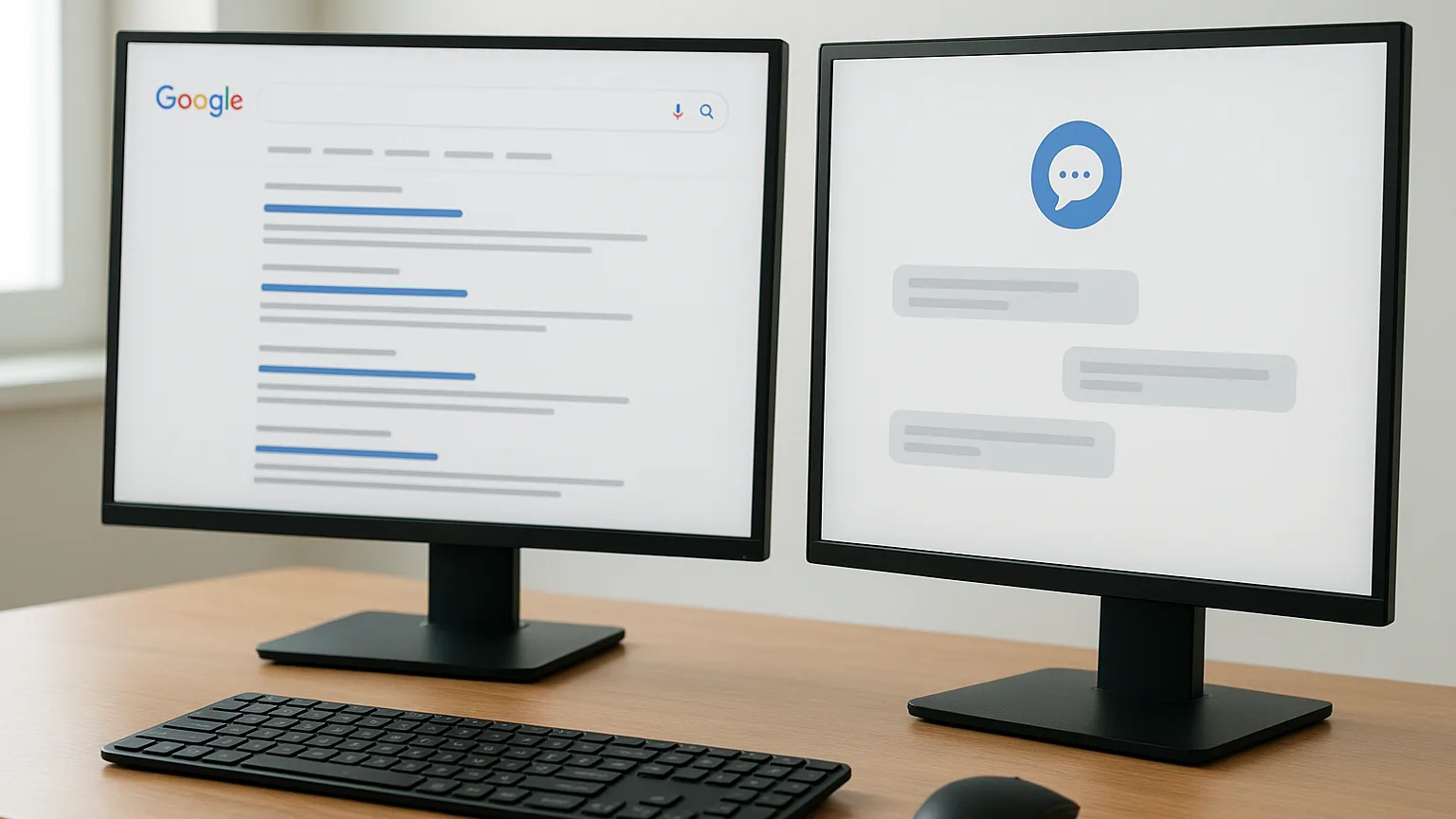
Picture a quarterly review at a Tempe SaaS company. The marketing lead shows a chart of keyword rankings, and most of them are up. Then the CEO asks a simple question: "When a buyer asks an AI tool for the best vendor in our space, do we show up?" The room goes quiet.
That question is now normal. Buyers ask chat assistants and AI Overviews to build vendor shortlists, compare pricing and explain tradeoffs. A page can rank third on Google and still never be named in the answer. Rankings tell you where a page sits. They do not tell you if your brand is part of the conversation.
Arizona tech firms feel this more than most. The rise of the silicon desert has packed more rivals into the same categories, from chip suppliers in Chandler to cybersecurity shops in Scottsdale. More rivals means fewer open slots in every AI answer.
None of this means Google is done. Classic search still drives most leads, and the debate over AI search versus traditional SEO is less of a fight than the headlines suggest. AI visibility sits on top of strong SEO. It does not replace it. Leadership simply needs clear numbers for both.
Build Your Prompt Set Before Any Metric
Every KPI below depends on one asset: a fixed list of prompts your buyers would really type. Without it, your numbers will swing from month to month for no clear reason.
- Start with 30 to 50 prompts. That is enough to spot trends without drowning your team.
- Mix three prompt types. Use category prompts ("best managed IT provider in Phoenix"), comparison prompts ("Vendor A vs Vendor B") and problem prompts ("how to cut cloud costs for a mid-size firm").
- Borrow real wording. Pull phrases from sales calls, support tickets and Search Console queries that run eight words or longer.
- Lock the list for a full quarter. Put new prompts in a separate group so older trends stay clean.
- Test across platforms. Run the same set in Google AI Overviews, ChatGPT, Perplexity, Gemini and Copilot.

KPI 1: Citation Share
Citation share is the percent of AI answers in your prompt set that link to or name your domain as a source. If 40 prompts produce 40 answers and 10 of them cite your site, your citation share is 25 percent.
This is the closest thing to "rank" in AI search. It shows whether models trust your pages enough to send readers to them. Always track it next to your top three rivals, because a share number only means something in context.
How to Track Citation Share
Tools like the Semrush AI Visibility Toolkit, Ahrefs Brand Radar, Profound and Peec AI run prompt sets on a schedule and log which domains get cited. Smaller teams can start with Otterly.AI or a shared spreadsheet and a monthly manual run. Record the date, platform, prompt and every cited domain.
KPI 2: Brand Mention Accuracy
Being named is only half the job. AI tools often get details wrong. They may list a product you retired, quote old pricing, place your headquarters in the wrong city or claim you lack a feature you shipped last year. For a B2B buyer, one wrong fact can knock you off a shortlist.
Brand mention accuracy is the percent of mentions where the key facts are correct. Build a fact sheet of 10 to 15 items: founding year, headquarters, core products, integrations, pricing model, compliance certifications and leadership names. Score each answer against that sheet.
"Most clients are surprised the first time we audit what AI tools say about them," says Marcus Hale, AI search strategist at Soderman SEO. "The fix is usually simple. Update the About page, clean up old press releases and make sure directory listings match. Models repeat what the web repeats."
How to Track Mention Accuracy
Most AI visibility tools save the full answer text, so you can export it and score it. Keep a pass or fail column for each fact. Report the overall percent, then list the top three errors and name who owns each fix.
KPI 3: Prompt Coverage
Prompt coverage answers a blunt question. In how many buyer prompts do you appear at all, whether cited, named or recommended? Coverage counts any presence. Citation share counts only answers that use your site as a source.
Low coverage usually points to content gaps. If you never show up for "how to choose" prompts, you likely lack clear, direct pages on that topic. This is where zero-click content pays off, since answers written for skimmers are the ones models lift and summarize.
- Break coverage out by prompt group: category, comparison and problem.
- Flag any group under 20 percent as a content priority.
- Recheck after new pages have been live for six to eight weeks.
KPI 4: Recommendation Position
Not all mentions carry the same weight. Being the first name in a list of top options is worth far more than a passing note in paragraph four. Recommendation position tracks where you land and how you are framed.
Score each mention on a simple scale. A 3 means you were named first or called the top pick. A 2 means you made the main list. A 1 means you got a passing mention or a warning. Average the scores each month. Add a quick tone tag (positive, neutral or negative) so leadership can see if an old review or stale news story is shaping how models describe you.
Profound and Peec AI both report position and sentiment. If you track by hand, two extra columns in your spreadsheet will do the job.
KPI 5: AI-Referred Pipeline
This is the number your CFO cares about most. It ties AI visibility to real visits, leads and deals.
Setting Up Pipeline Tracking
- In Google Analytics 4, build a custom channel group called "AI Assistants" that matches referrer domains for ChatGPT, Perplexity, Gemini, Copilot and similar tools.
- Pass that channel into your CRM so every lead keeps its source tag.
- Add a "How did you hear about us?" field to demo forms. Many AI-driven buyers will say so plainly.
- Watch branded search lift in Search Console. Buyers often read an AI answer, then search your name directly.
Expect this number to look small at first. AI answers often solve the question without a click. That is why KPIs 1 through 4 matter so much. They measure influence before it shows up as traffic.
A One-Page Report Built for Busy Executives
Put all five KPIs on one slide. Show the current month, last month and the change. Add your top two rivals for citation share and coverage. Then list three actions for next month, each with an owner. Keep tool screenshots in an appendix where they will not crowd the story.
Some in-house teams run this report on their own, while others hand it to one of the SEO companies in Phoenix that now offer AI visibility audits. Either way, keep the report in the same shape each month so trends are easy to read at a glance.
One more tip: check your own site structure. If two pages chase the same topic, models may cite the weaker one or skip both. Fix that overlap before you blame the algorithm.
From Scoreboard to Shortlist
Rankings still matter, but they no longer tell the whole story to a leadership team. A fixed prompt set gives you a stable base. From there, citation share shows how often AI tools trust your pages. Mention accuracy shows if they describe you correctly. Prompt coverage reveals content gaps. Recommendation position shows how you are framed against rivals, and AI-referred pipeline ties it all to revenue.
For Arizona B2B tech companies in crowded markets, these five KPIs turn a vague worry into a monthly plan with owners and deadlines. Start small, keep the report on one page and measure the same way every month. When the CEO asks if buyers can find you in AI answers, you will have a clear number ready instead of a quiet room.